

BOOKS & HANDBOOKS
• A Field Guide to Common Fishes of the Pacific Northwest
• A Field Guide to Seashells and Shellfish of ohe Pacific Northwest
• A Field Guide to Sea Stars of the Pacific Northwest
• A Field Guide to the Identification Of Pebbles
• A Field Guide to Trees of the Pacific Northwest
• A Guide to Common Freshwater Invertebrates of North America
• A Handbook for Stream Enhancement and Stewardship
• A Laboratory Manual for Marine Science Studies
• A Study of Water Quality
• Better Trout Habitat: A Guide to Stream Restoration and Management
• Coastal Fishes of the Pacific Northwest
• Fish Disease: Diagnosis And Treatment
• Field Identification of Coastal Juvenile Salmonids
• Fish Hatchery Management
• Fisheries Ecology and Management
• Globe Soil Color Book
• Flash Cards of Common Freshwater Invertebrates of North America
• Forest Ecosystem Science and Management
• Investigating Water Problems
• Lake, River and Sea-Run Fishes of Canada
• Limnology: An Introduction to the Fresh Water Environment
• Munsell Plant Tissue Color Charts
• Munsell Rock Color Charts
• Munsell Soil Color Charts
• Our Environment Battles Water Pollution
• Pacific Reef & Shore
• Pacific Seaweeds
• Petersen Field Guide: Freshwater Fishes
• Plankton Culture Manual
• Pocket Reference
• Quick Quide to Freshwater Invertebrates
• Sustainable Freshwater Aquaculture
• The Field Manual for Water Quality Monitoring
• The LaMotte Soil Handbook
• The Monitors Handbook
• The Water Quality Educator CD
|
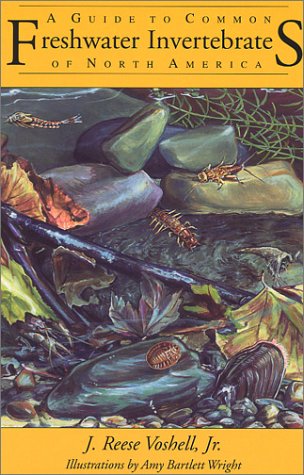
A GUIDE TO COMMON FRESHWATER INVERTEBRATES OF NORTH AMERICA:J. Voshell Jr., 2002 This book meets the needs of teachers, amateur naturalists, environmentalists,
anglers, and others interested in aquatic biology by providing substantive
information in non-technical language for about 100 of the most common groups of
invertebrates found in the inland waters of North America. It is broad in scope, geographically and
taxonomically; it is written at a substantive yet easily accessible level that will appeal to both general
readers and those with more advanced interest in the subject; and it contains numerous high-quality
illustrations, including more than 100 specially commissioned color plates. 103 color pages, 135 b/w illustrations.
454 pages. Softcover.
|
|||
|
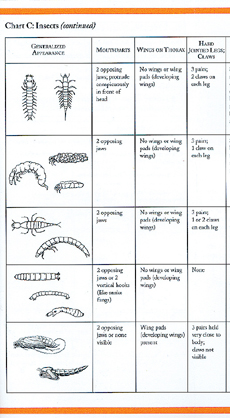
QUICKGUIDE TO MAJOR GROUPS OF FRESHWATER INVERTEBRATES:Click here to see front and back of guide by J. Reese Voshell, Jr., illustrated by Amy Bartlett Wright QuickGuide will be useful to teachers, students, naturalists, water quality monitors, landowners, aquatic
resource managers, youth groups, and others interested in, or responsible for, studying, monitoring, or managing freshwater
resources. QuickGuide is a modestly reorganized version of information contained in J. Reese Voshell's A Guide to Common
Freshwater Invertebrates of North America. The great advantage of the stand-alone version of QuickGuide is that it is
easier to use in the larger format than is the guide in the book, and it can be used in the field or laboratory with
minimal risk of damage by water or mud.
|
|||
|
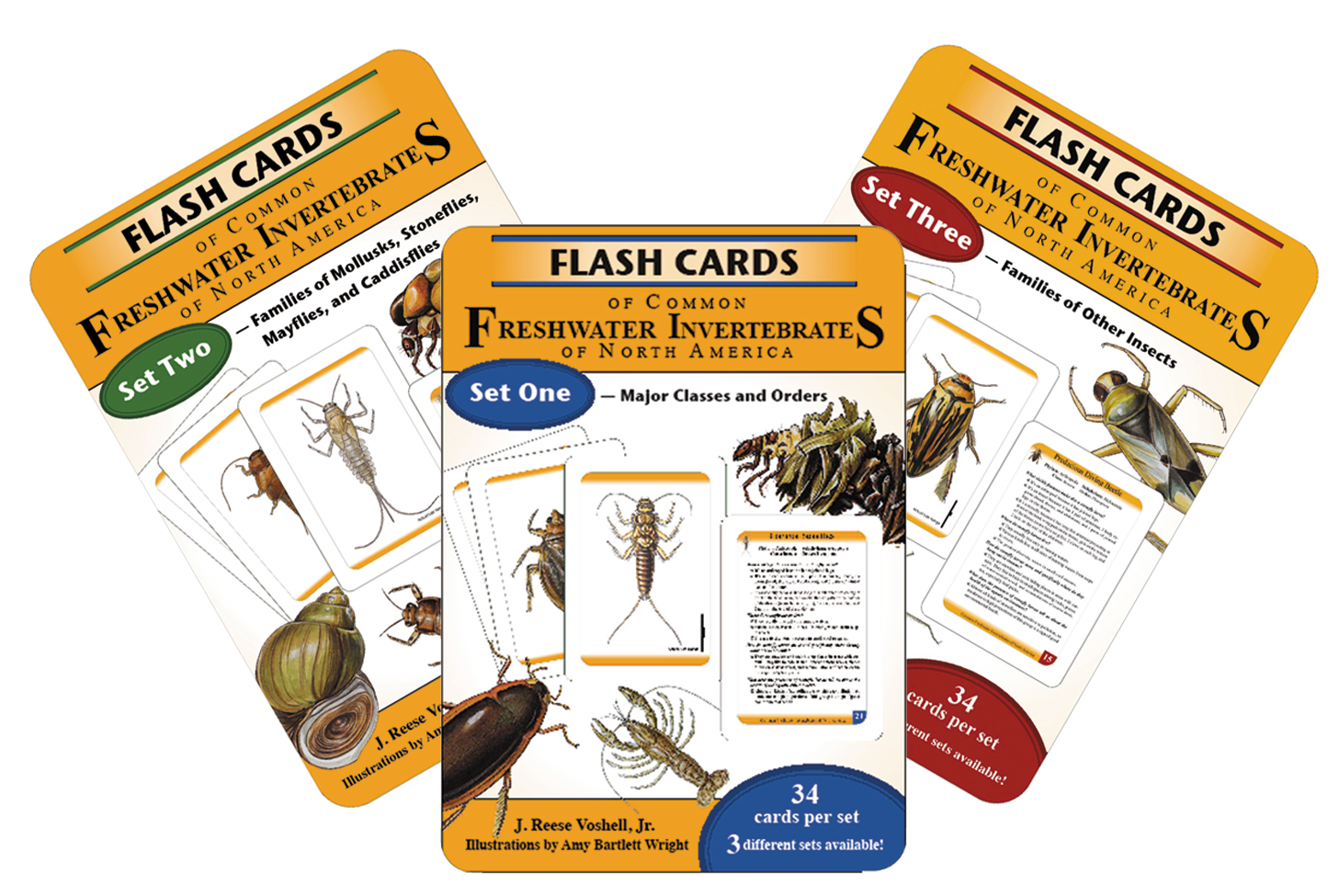
FLASH CARDS OF COMMON FRESHWATER INVERTEBRATES OF NORTH AMERICA |
| #BK-FC1: | Set 1 - Flash Cards of Common Freshwater Invertebrates of North America | $45.00 |
FLASH CARDS OF COMMON FRESHWATER INVERTEBRATES OF NORTH AMERICA
SET TWO--Families of Mollusks, Stoneflies, Mayflies, and Caddisflies
Click here to see sample flashcard
by J. Reese Voshell, Jr., illustrated by Amy Bartlett Wright
4"x 6", two-sided waterproof flash cards, 32 cards per set.
SET TWO and SET THREE treat the taxa at the family level and thereby provide more detail which, in turn, affords the opportunity to
better understand the biological diversity of freshwater systems and the changes in environmental health brought on by human activities.
These sets would be most useful for teaching principles of biology and ecology at advanced high school and college levels, for training
instructors who would be conducting interpretation or outreach activities, and for biomonitoring carried out by experienced citizen volunteers,
agency personnel, or professional scientists.
Viviparid snails; Pleurocerid snails; Ancylid snails; Planorbid snails; Lymnaeid snails; Physid snails; Mussels; Fingernail or pea clams;
Asian clam; Zebra mussel; Roachlike stoneflies; Giant stoneflies; Common stoneflies; Perlodid stoneflies; Winter stoneflies; Common burrower
mayflies; Small squaregill mayflies; Spiny crawler mayflies; Flatheaded mayflies; Pronggilled mayflies; Small minnow mayflies; Micro caddisflies;
Saddlecase maker caddisflies; Giant case maker caddisflies; Common netspinner caddisflies; Fingernet caddisflies; Trumpet net, tubemaker
caddisflies; Freeliving caddisflies; Longhorned case maker caddisflies; Northern case maker caddisflies.
| #BK-FC2: | Set 2 - Flash Cards of Common Freshwater Invertebrates of North America | $45.00 |
FLASH CARDS OF COMMON FRESHWATER INVERTEBRATES OF NORTH AMERICA
SET THREE--Families of Other Insects
Click here to see sample flashcard
by J. Reese Voshell, Jr., illustrated by Amy Bartlett Wright
4"x 6", two-sided waterproof flash cards, 32 cards per set.
SET TWO and SET THREE treat the taxa at the family level and thereby provide more detail which, in turn, affords the opportunity to
better understand the biological diversity of freshwater systems and the changes in environmental health brought on by human activities.
These sets would be most useful for teaching principles of biology and ecology at advanced high school and college levels, for training
instructors who would be conducting interpretation or outreach activities, and for biomonitoring carried out by experienced citizen volunteers,
agency personnel, or professional scientists.
Water boatmen; Backswimmers; Water scorpions; Giant water bugs; Water striders; Crawling water beetles (adult);
Whirligig beetles (adult); Riffle beetles (adult); Predaceous diving beetles (adult); Water scavenger beetles (adult);
Broadwinged damselflies; Spreadwinged damselflies; Narrowwinged damselfies; Clubtail dragonflies; Darner dragonflies;
Skimmer dragonflies; Dobsonflies, fishflies, hellgrammites; Alderflies; Water pennies (larva); Riffle beetles (larva); Predaceous
diving beetles (larva); Phantom crane flies; Mosquitoes; Black flies; Non-biting midges; Biting midges, no-see-ums, punkies;
Crane flies; Horse flies, deer flies; Aquatic snipe flies; Shore flies, brine flies.
| #BK-FC3: | Set 3 - Flash Cards of Common Freshwater Invertebrates of North America | $45.00 |
A LABORATORY MANUAL FOR MARINE SCIENCE STUDIES:
LaMotte Company
Provides information on sampling procedures and water quality analysis in salt
water environments. Includes test procedures and description of reagents and labware. 32 pages.
Softcover.
| #1587: | A Laboratory Manual For Marine Science Studies | $9.50 |
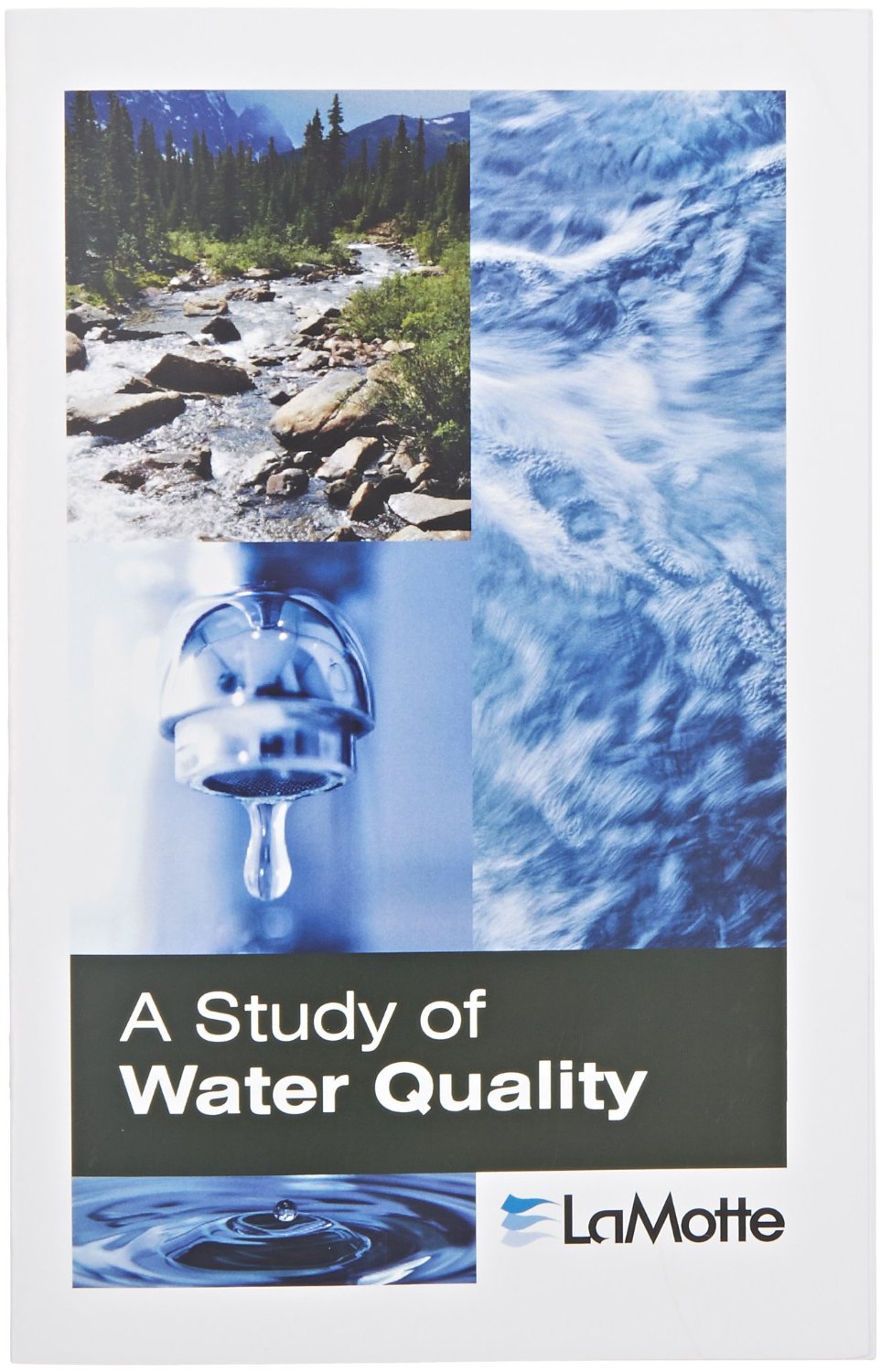
A STUDY OF WATER QUALITY:
Dr. Charles E. Renn
An in-depth examination of the life-cycle of water, from its natural occurrence to its
treatment for domestic and industrial usage. Emphasis is provided on such water quality problems as
scaling, corrosiveness, taste, and turbidity. 46 pages.
Softcover.
| #1532: | A Study Of Water Quality | $9.50 |
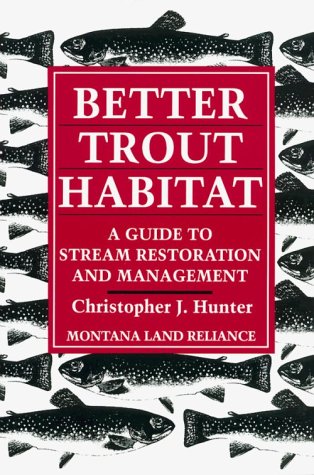
BETTER TROUT HABITAT: A GUIDE TO STREAM RESTORATION AND MANAGEMENT
Hunter, Christopher J., 1995
This book provides an overview of trout habitat characteristics and methods of habitat
improvement. It provided details about the need for habitat characteristics like bank cover, in-stream
debris, and sinuous stream channels. Explains the physical, chemical, and biological needs of trout,
and shows how climate, geology, vegetation, and flowing water all help to create trout habitat.
Tables, photos, figures. 320 pages.
Softcover.
| #BK-BTH: | Better Trout Habitat: A Guide to Stream Restoration and Management | $79.00 |
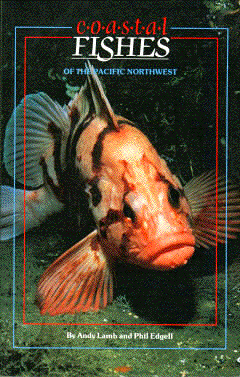
COASTAL FISHES OF THE PACIFIC NORTHWEST:
Andy Lamb & Phil Edgell, 2nd Edition, 2010
A completely revised and updated edition of this best-selling comprehensive field guide to marine fishes of BC, Washington,
Oregon, southern Alaska and Northern California.
Written by a marine biologist and illustrated in colour by a prizewinning underwater photographer, Coastal Fishes of the Pacific
Northwest identifies each fish by its common name and is illustrated with full-colour photographs and labelled sketches.
Special sections present catching tips for anglers and commercial fishermen; location hints for divers, beachcombers and
pleasure boaters; and cooking ideas for seafood gourmets. The information included in these sections provides a brief but
detailed description of each fish's habitat, physical characteristics and behaviour-everything that a fisherman or an amateur
naturalist needs to know!
300+ colour photographs & illustrations, 352 Pages. Paperback.
| #BK-CFPN: | Coastal Fishes of the Pacific Northwest | $28.95 |
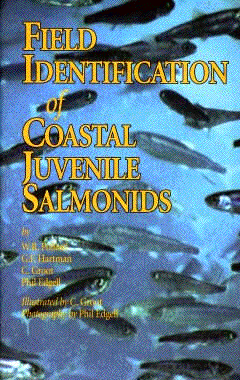
FIELD IDENTIFICATION OF COASTAL JUVENILE SALMONIDS:
W.R. Pollard & G.F. Hartman & C. Groot & Phil Edgell, illustrated by C. Groot, photos by Phil Edgell
Correctly identifying young salmonids improves the accuracy of resource management information,
leading to a fuller knowledge of the distribution and status of fish stocks. Until now, identifying coastal salmonids
during their fry to smolt life stages in freshwater and saltwater estuaries of the Pacific Northwest has been difficult
due to the lack of comprehensive, practical information. This guide was written and compiled by top fisheries biologists
from government and industry who wanted to make available a simple, easy-to-use system for identifying 10 of the most
common species of juvenile salmon, trout and char in the field.
The guide uses high-quality photos, colour illustrations and detailed drawings to show distinguishing physical
features for each species. A fish viewing bag provided with the guide helps identify most fish in the field, and
an easy-to-follow chart facilitates identification of the three major groupings and individual species. Habitat use
information and maps help to determine where and when various species may be found for sampling.
| #BK-FICJS: | Field Identification of Coastal Juvenile Salmonids | $15.75 |
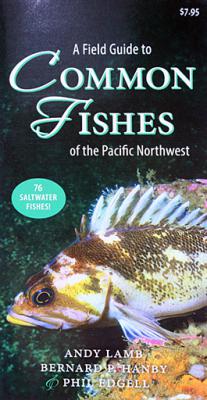
A FIELD GUIDE TO COMMON FISHES OF THE PACIFIC NORTHWEST:
Andy Lamb, Bernard Hanby & Phil Edgell
The waters of the Pacific Northwest are home to some of the most unique and diverse marine creatures in the world, including rockfishes,
greenlings and, of course, salmon. This full-colour waterproof brochure is packed with information on seventy-eight "must-have" common fishes of the
Pacific Northwest. A Field Guide to Common Fish of the Pacific Northwest provides a succinct rundown on a huge variety of our fishy neighbours, and
is an ideal guide for fishermen, divers and anyone interested in the marine life that fills our surrounding waters.
2015, Pamphlet, 70 Colour Photos.
| #BK-FGCFPNW: | A Field Guide to Common Fishes of the Pacific Northwest | $7.95 |
FISH HATCHERY MANAGEMENT:
US Fish & Wildlife Service, 1992
This is a must-have book, covering a wide variety of subjects, from setting up a hatchery
through feeding, hatchery operation, fish health, water quality and transportation. Many useful charts.
US Fish & Wildlife Service, 1992. Softcover, 515 pages.
| #BK-FHM: | Fish Hatchery Management | $109.00 |
FISH DISEASE: DIAGNOSIS AND TREATMENT
Edward J. Noga, 2010, Second Edition
Fish Disease: Diagnosis and Treatment, Second Edition provides thorough, yet concise descriptions of viral,
bacterial, fungal, parasitic and noninfectious diseases in an exhaustive number of fish species. Now in full
color with over 500 images, the book is designed as a comprehensive guide to the identification and treatment
of both common and rare problems encountered during the clinical work-up. Diseases are discussed following
a systems-based approach to ensure a user-friendly and practical manual for identifying problems.
Fish Disease: Diagnosis and Treatment, Second Edition is the must-have reference for any aquaculturists,
aquatic biologists, or fish health specialists dealing with diagnosing or treating fish diseases.
Hardcover, 536 Color Pages.
| #BK-FDDT: | Fish Disease: Diagnosis and Treatment | $195.00 |
INVESTIGATING WATER PROBLEMS:
Dr. Charles E. Renn
Provides a comprehensive description of
twenty-five water quality test factors, including analytical procedures for their
measurement and the interpretation of test results. Also includes illustrations and a valuable glossary. 72 pages. Softcover.
| #1589: | Investigating Water Problems | $9.50 |
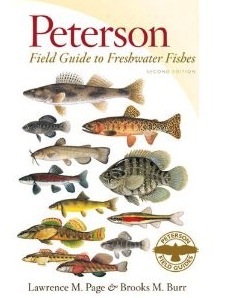
PETERSON FIELD GUIDE - FRESHWATER FISHES, 2ND EDITION:
Brooks, M. Burr, 2011
There are nearly 1,000 species of freshwater fishes in North America alone, and identifying them can
sometimes be a daunting task. In fact, in just the twenty years since publication of the first
edition of the Peterson Field Guide to Freshwater Fishes, the number of species has risen by
almost 150, including 19 marine invaders and 16 newly established nonnative species. This second
edition incorporates all of these new species, plus all-new maps and a collection of new and
revised plates. Some of the species can be told apart only by minute differences in coloration
or shape, and these beautifully illustrated plates reveal exactly how to distinguish each species.
The guide includes detailed maps and information showing where to locate each species of fish, whether that species can be
found in miles-long stretches of river or small pools that cover only dozens of square feet. The ichthyologic world of the twenty-first
century is not the same as it was in the twentieth, and this brand-new edition of the definitive field guide to freshwater fishes reflects these many changes.
2011, Trade Paperback, 688 Pages
| #BK-PFGFWF: | Petersen Field Guide: Freshwater Fishes | $29.95 |

A HANDBOOK FOR STREAM ENHANCEMENT AND STEWARDSHIP:
The Izaak Walton League of America
A Handbook For Stream Enhancement And Stewardship from the Izaak Walton League of America is an excellent study
of conservationist activities in dynamically aiding the restoration, enhancement, and environmental maintenance
of rivers and streams. Deftlyproviding readers with a conceptual grasp of the "stewardship" responsibilities of
various groups, organizations, individuals, companies, communities, and government planning agencies, A Handbook
For Stream Enhancement And Stewardship informatively presents a ideas and expertise with which to actively make a
difference in maintaining and enhancing rivers and streams for purposes of the flora and fauna dependent upon them, as
well as the critically important role of the stream with respect to watershed dynamics. A core addition to personal, professional, environmental activists, academic, and community
library Environmental Studies reference collections, A Handbook For Stream Enhancement And Stewardship is very
strongly recommended as an expert informational resource for environmental and waterway restoration and conservation.
2006, Paperback, 188 Pages
| #BK-HSES: | A Handbook for Stream Enhancement and Stewardship | $55.00 |
FISHERIES ECOLOGY AND MANAGEMENT:
Carl J. Walters, Steven J. D. Martell
Quantitative modeling methods have become a central tool in the management of harvested fish populations.
This book examines how these modeling methods work, why they sometimes fail, and how they might be improved
by incorporating larger ecological interactions. Fisheries Ecology and Management provides a broad introduction to
the concepts and quantitative models needed to successfully manage fisheries.
Walters and Martell develop models that account for key ecological dynamics such as trophic interactions, food webs,
multi-species dynamics, risk-avoidance behavior, habitat selection and density-dependence. They treat fisheries policy
development as a two-stage process, first identifying strategies for varying harvest in relation to changes in abundance,
then finding ways to implement such strategies in terms of monitoring and regulatory procedures. This book provides a
general framework for developing assessment models in terms of state-observation dynamics hypotheses, and points out
that most fisheries assessment failures have been due to inappropriate observation model hypotheses rather than faulty models for ecological dynamics.
Intended as a text in upper division and graduate classes on fisheries assessment and management, this useful
guide will also be widely read by ecologists and fisheries scientists.
2004, Paperback, 448 Pages
| #BK-FEAM: | Fisheries Ecology and Management | $99.00 |
SUSTAINABLE FRESHWATER AQUACULTURE:
Nick Romanowsk
A complete, accessible and affordable guide to freshwater aquaculture, emphasising
sustainable use of all resources: whether it be on a small scale in a backyard pond, or in commercial
production on broad acres. The book includes detailed information from design and construction of ponds
to water quality, enhancing production through aeration, filtration and water treatment wetlands, foods
and feeding, breeding and propagating aquatic animals and plants, sources of stock and polyculture
(mixing fish, crustaceans, other animals, and plants for greater yields).
2007, Paperback, 184 Pages
| #BK-SFA: | Sustainable Freshwater Aquaculture | $69.00 |
LAKE, RIVER AND SEA-RUN FISHES OF CANADA:
Frederick H. Wooding, 1997
The only popular guide to freshwater fishing in all parts of Canada, Lake, River and Sea-Run Fishes of Canada is a must for
anglers, naturalists and anyone who loves fine nature writing. Whether you want to find out how the Dolly Varden trout got its odd name,
sort out the salmonids' tangled family relations, or identify some queer-looking item you've never hooked before, this book will prove indispensable.
The only complete guide to freshwater game fishes in all parts of Canada, this book is a must for naturalists, anglers and everyone
else who wants to learn more about Canada's wildlife, it includes detailed descriptions and 36 full-colour illustrations as well as 1
4 beautiful and precise line drawings.
All of the main fish families are represented in Canadian waters, and new species are still being discovered. Lake, River and Sea-Run
Fishes of Canada offers biology, angling tips and notes on the curiosities of all the best-known game fishes, and fishing lore from high
mountain lakes, prairie rivers, the Great Lakes, the Arctic coastline and ocean tidepools.
Loaded with practical as well as scientific information and pleasantly laced with history and lore, the book
This revised edition includes a foreword by the eminent fish scientist Professor Joseph Nelson and an updated
essay on endangered species by Dr. R.R. Campbell.
1997, Softcover, 304 Pages.
| #BK-LRSRFC: | Lake, River and Sea-Run Fishes of Canada | $26.95 |
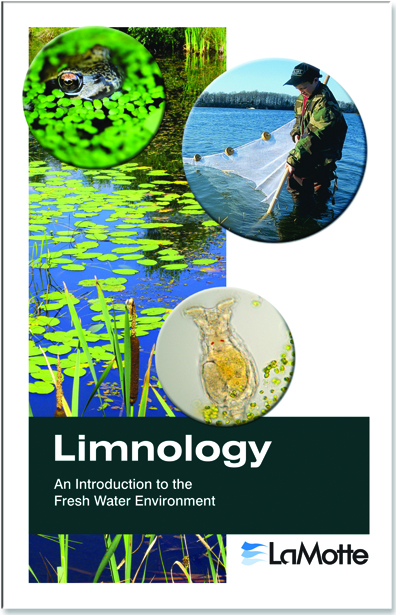
LIMNOLOGY: AN INTRODUCTION TO THE FRESH WATER ENVIRONMENT:
William H. Amos
A concise resource on the biological, chemical, and physical processes of ponds,
lakes, streams, and rivers. Topics include stream dynamics, plant zonation, the succession of ponds,
the energy cycle of ponds, etc. 40 pages. Softcover.
| #1593: | Limnology: An Introduction to the Fresh Water Environment | $9.50 |
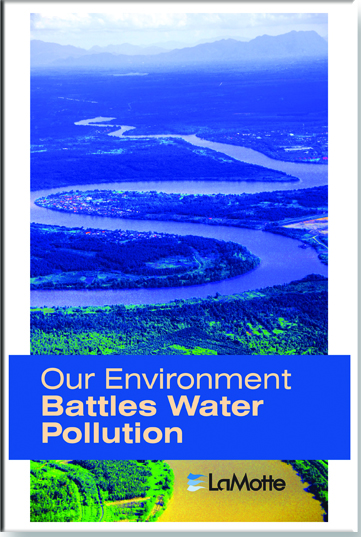
OUR ENVIRONMENT BATTLES WATER POLLUTION:
Dr. Charles E. Renn
A lively text that follows the journey of a theoretical river from
its origin as a mountain brook to its discharge into a marine estuary. Includes the chemical
and biological changes that occur as the stream reacts to impurities from natural and industrial
sources. 32 pages. Softcover.
| #1592: | Our Environment Battles Water Pollution | $9.50 |
PACIFIC REEF & SHORE:
Rick M. Harbo, 2017 (Second Edition)
With more species, up-to-date scientific information and many brilliant new full-colour photographs
of the 300 most common plants and animals of the intertidal zone. Arranged for quick identification with
colour-coded sections, this ingenious guide has written descriptions of each organism, with size, habitat
and interesting facts conveniently placed next to its photo. 96 pages, 300 Photos, Paperback
| #BK-PRS: | Pacific Reef and Shore | $12.95 |
PLANKTON CULTURE MANUAL:
F. Hoff and T.W. Snell, 2007, 6th Edition
An excellent book on culturing microalgae, rotifers, ciliates, artemia and daphnia.
183 pages. Paperback.
| #WQB32: | Plankton Culture Manual | $65.00 |
POCKET REFERENCE:
Thomas J. Glover, reprint 2002, 3rd edition.
A valuable pocket-sized reference book which covers Air & Gases, Computers,
Electronics, General information, Geology, Hardware, Math, Money, Steel and Metals, Surveying and Mapping,
Weights and measures and much more. A must for everybody. 480 pages, Softcover.
| #POCREF: | Pocket Reference | $17.95 |
THE FIELD MANUAL FOR WATER QUALITY MONITORING:
(13th edition) by Mark Mitchell and William Stapp
This serves as the standard text for school-based water quality monitoring programs
in schools around the world. The manual details nine water quality tests: dissolved oxygen, fecal coliform,
pH, total solids, total phosphorous, nitrates, turbidity, biochemical oxygen demand, and temperature.
The manual also includes chapters on heavy metals testing, land use practices, and computer networking.
The current edition specifically features LaMotte water quality test kits. 158 Pages, Softcover.
| #3-1508: | The Field Manual for Water Quality Monitoring | $62.00 |
THE MONITOR'S HANDBOOK:
LaMotte Company
A valuable reference guide for both beginners and veterans of water quality
analysis in natural aquatic systems. Provides a comprehensive overview of monitoring streams,
lakes, rivers, and estuaries. Includes physical, biological, and chemical factors of water quality
and analytical procedures for their measurement. The basics of waterway surveys, program planning,
data analysis and reporting are also described. 71 pages. Softcover.
| #1507: | The Monitor's Handbook | $23.95 |
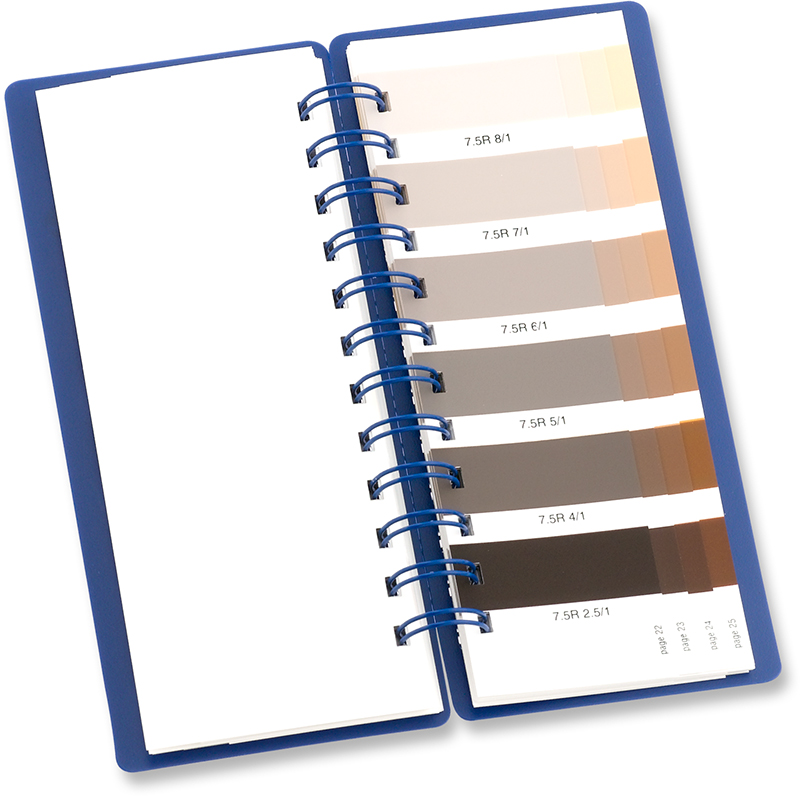
THE GLOBE SOIL COLOR BOOK:
This water-resistant soil book features a unique "waterfall" page design
with each of the 208 extra-large color samples stripe-coated across the page for easy comparison
to soil samples, while also preserving the three-dimensional color order throughout the book.
Features 8 hues (7.5R - 5Y), 23 Gley colors, a soil structure ruler, and diagrams and instructions
for determining soil color, structure, texture, consistence, and free carbonates. Constructed of
water-resistant, non-paper stock. Chart may be exposed to moisture and cleaned after use without
damage. Page sizes vary according to "waterfall" effect: 2", 2-1/4", 2-1/2", 2-3/4".
Color stripe size: approx. 11/16" wide.
| #77369: | Globe Soil Color Book | $115.00 |
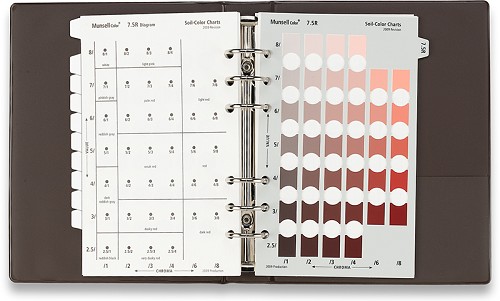
MUNSELL SOIL COLOR CHARTS:
This revised edition features the same colors available in previous books plus additional color
charts. Included are a 10Y and 5GY soil chart for glauconite soils, a 5R soil chart for Australia
and Southeast Asia, and a 7.5R soil chart for tropical and semi-tropical soils. A Munsell high value,
low chroma "white" page shows half steps from 8.5 to 9.5 in value with chromas of 1 and 2 for N,
7.5YR, 10YR, and 2.5Y. Use this page to describe carbonate, silica, gypsum, and soluble salt
precipitates and evaporites common to arid and semi-arid environments as well as very light-colored
parent materials such as diatomaceous earth and volcanic ash. The book's light gray pages decrease
sun glare. The color chips are recessed into each water-resistant page to allow dirt and debris to
be wiped off easily with less effect on the color chips. 2009 Revised Edition.
Chart Size: 6" x 8"
| #77321: | Munsell Soil Color Charts | $274.00 |
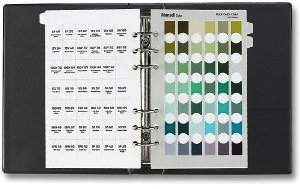
MUNSELL GEOLOGICAL ROCK COLOR CHARTS:
This new edition is a revision of the previously published Geological Society of America (GSA) Rock-Color Chart prepared by the
Rock-Color Chart Committee. Included are 115 color chips with the Munsell numerical designation for identifying the range of
rock colors. Works with either wet or dry specimens. Excellent for describing the color of medium to fine-grained rocks.
Also helpful when working with coarse-grained rocks. A neutral mask is included for isolating individual colors. Loose
leaf binder. 2009 Revised Washable Edition. Page Dimensions: 4-3/8" x 7-1/4". Binder Dimensions: 6" x 7-3/4" x 1".
| #77333: | Munsell Geological Rock Color Charts | $121.00 |
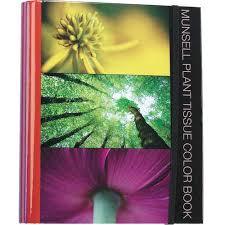
MUNSELL PLANT TISSUE COLOR CHARTS:
Accurately determine and record color from nutrient deficiency in plant tissues.
Contains 320 matte color chips mounted on charts for 17 hues: 2.5R, 5R, 10R, 2.5YR, 5YR, 7.5YR, 2.5Y, 5Y, 2.5GY, 5GY, 7.5GY, 2.5G, 5G, 7.5G, 5BG, 2.5B, and 5RP.
Instructions, binder, and masks included. 1977 Edition. Page Dimensions: 4-3/8" x 7-1/4". Binder Dimensions: 6" x 7-3/4" x 1".
| #77361: | Munsell Plant Tissue Color Charts | $274.00 |
THE LAMOTTE SOIL HANDBOOK:
LaMotte Company
A manual for "growers" and soil investigators! Provides information on
major and minor nutrients, trace elements, soil pH, organic matter, and soil texture.
Also includes lime and fertilizer recommendations for a variety of crops and plants. 60 pages. Softcover.
| #1504: | The LaMotte Soil Handbook | $9.50 |
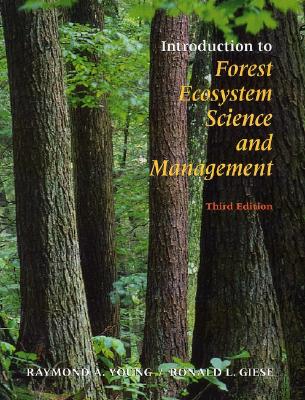
FOREST ECOSYSTEM SCIENCE AND MANAGEMENT
Third Edition. Edited by Raymond A. Young and Ronald L. Giese. John Wiley & Sons, Inc., 2003.
Provides a broad overview of the field of forestry from a number of authors.
Content coverage ranges from the basic cell, individual trees, and the forest stand to management
of the forest stand and acquisition of goods and services from the forest.
Each author provides general coverage of his or her specialized field within
the discipline and emphasizes how decisions made by forest managers affect the
forest ecosystem. Appendices. Hardcover. 560 Pages.
| #BK-FESM: | Forest Ecosystem Science and Management | $145.00 |
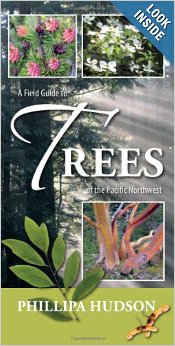
A FIELD GUIDE TO TREES OF THE PACIFIC NORTHWEST
This laminated (8 fold pamphlet) guide features twenty-six native trees commonly found from Alaska to Oregon,
providing common and Latin names accompanied by colour photographs of identifying features such
as bark, leaves or needles, flowers, cones, seeds and fruit. Information on identification, range and an
illustration of each tree's silhouette make it a snap to distinguish a shore pine from a western white pine
or a trembling aspen from a paper birch. Also included are traditional uses and other interesting tree facts
and lore.
Dimensions (when folded) 9" x 4.5"
| #BK-FGTPNW: | Field Guide to Trees of Pacific Northwest | $7.95 |
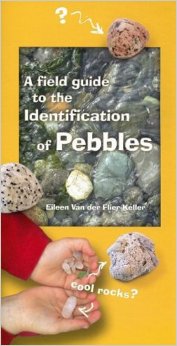
A FIELD GUIDE TO THE IDENTIFICATION OF PEBBLES
The Field Guide to the Identification of Pebbles, a full colour, laminated, accordion folded,
easy to use guide with over 80 beautiful photographs of pebbles from beaches and rivers.
Use the photos to identify over 28 different types of rocks and minerals.
The short text deals with how rocks form and how to tell if a rock
is igneous, sedimentary or metamorphic.
Dimensions (when folded) 9" x 4.5"
| #BK-FGIP: | Field Guide to the Identification of Pebbles | $7.95 |
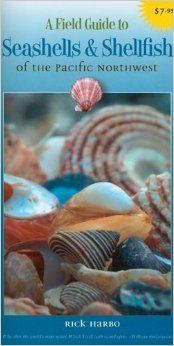
A FIELD GUIDE TO SEASHELLS AND SHELLFISH OF THE PACIFIC NORTHWEST
If you are in the Pacific Northwest, you will find local beaches as rich in
fascinating treasures as any place on earth--or at least you will once you have this handy
eight-fold guide to show you where to look and how to identify what you find.
Those whose interest in shellfish is mainly gastronomic will also find this waterproof guide an essential tool.
Dimensions (when folded) 9" x 4.5"
| #BK-FGSSPN: | A Field Guide to Seashells And Shellfish Of The Pacific Northwest | $7.95 |
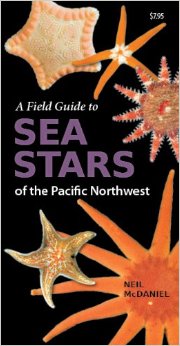
A FIELD GUIDE TO SEA STARS OF THE PACIFIC NORTHWEST
Sea stars are amongst the most common and conspicuous invertebrates that thrive in the rich waters of the Pacific
Northwest, from northern California to southeast Alaska. An underwater photographer,
journalist and naturalist with over 40 years of diving experience, Neil McDaniel provides many original field observations
to accompany his remarkable images of these fascinating animals.
This durable, water-resistant 8-fold field guide describes how to identify more than 30 species likely to
be encountered by beach walkers and scuba enthusiasts in the Pacific Northwest. It also provides intriguing
details about their behaviour, including how they move about, hunt for prey, reproduce and avoid predators.
It is an ideal companion for family explorations to the sea shore, an invaluable reference in any scuba diver's
kit bag and a useful addition to the home library..
Dimensions (when folded) 9" x 4.5"
| #BK-FGSTPN: | A Field Guide to Sea Stars Of The Pacific Northwest | $7.95 |
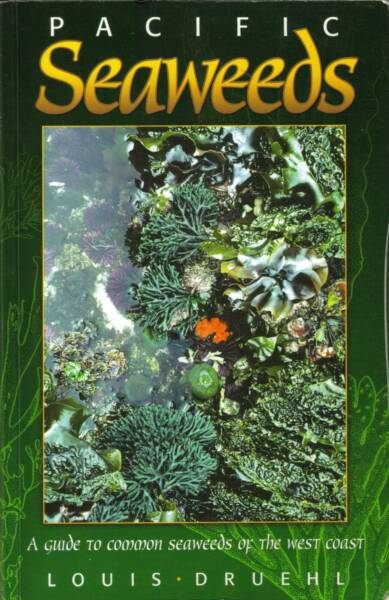
PACIFIC SEAWEEDS
Thomas Druehl, March 2001
With line drawings and vivid colour photographs, this easy-to-use book thoroughly documents every aspect of
seaweed life, from species identification and seaweed biology to the essential - and often surprising - roles
seaweed plays in the marine ecosystem and our everyday lives. Clear and informative, and packed with
comprehensive scientific information, interesting facts, further readings and even an assortment of tasty
seaweed recipes, this unique and highly readable guidebook will appeal to marine biologists, amateur
beachcombers and everyone in between. 192 pages, Softcover.
| #BK-PSW: | Pacific Seaweeds | $24.95 |
THE WATER QUALITY EDUCATOR CD:
Teach your students and volunteer monitors all about Natural Water Quality Monitoring. Use the CD to plan and implement a special long-term service project,
community outreach program, environmental course, and classroom and field trip pre-lab activity to test water quality in rivers, streams, lakes, ponds,
estuaries, and other natural bodies of water. The Water Quality Educator CD along with the Monitor's Handbook (code 1507) provides extensive training for
the water scientist focusing on three aspects of water quality monitoring as practiced extensively by schools and communities throughout the world.
Water quality is monitored by testing for a variety of factors in three broad categories:
1. Chemical (Dissolved oxygen, nitrate, pH, phosphate, alkalinity)
2. Biological (Aquatic Macroinvertebrates as living indicators of water quality)
3. Microbiological (E. coli, total coliforms, fecal coliforms, Enterococcus)
This distinctive reference will guide you through the decisions that are made prior to testing to the analysis of the final results.
Determine why you want to monitor. Select the site(s). What tests will give you the information you need to fulfill your objectives?
During testing, this guide will show how to perform the test. After testing, it will interpret the results.
| #5872: | The Water Quality Educator CD | $73.95 |